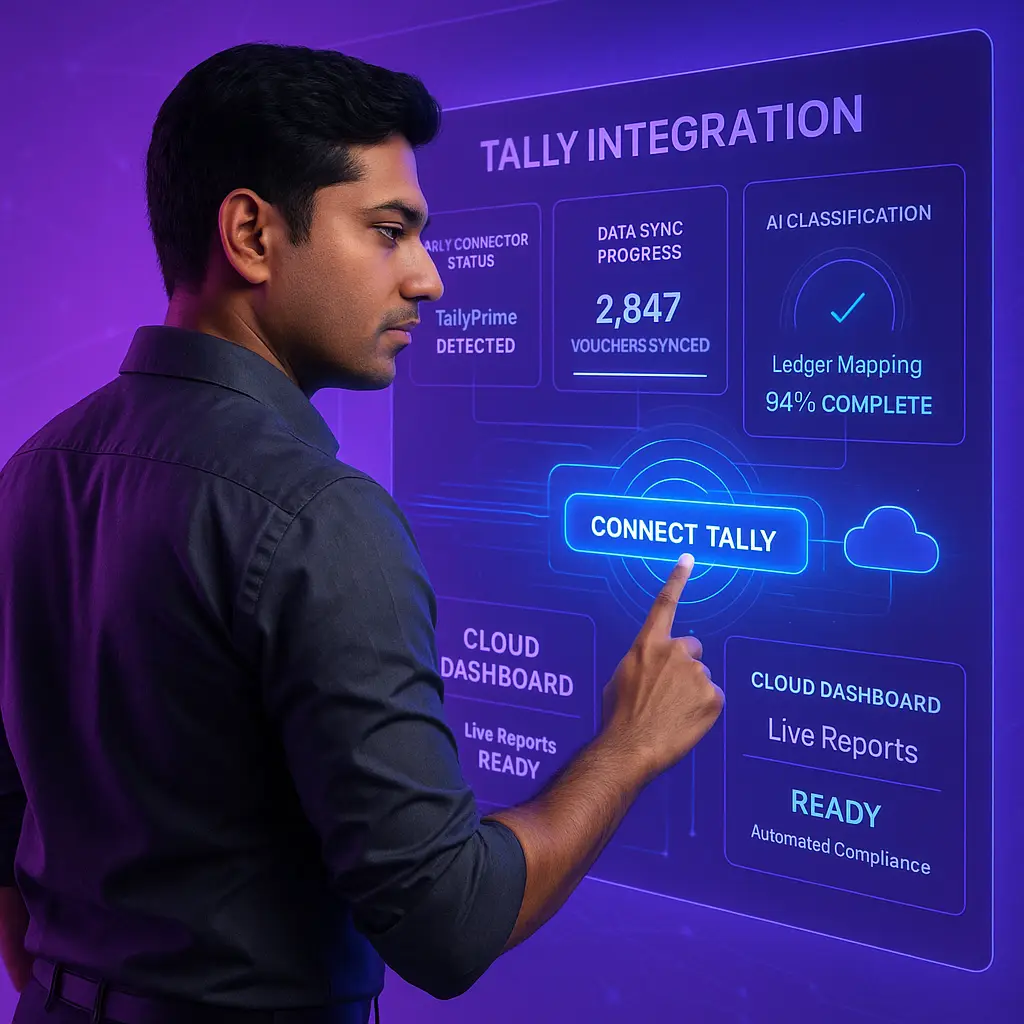
In the dynamic business environment, accounting efficiency directly impacts decision-making, cash flow management, and overall operational success. Traditional accounting methods, heavily reliant on manual entries, repetitive reconciliations, and isolated ledgers, often lead to delays, errors, and incomplete insights. This is where tally integration with AI Accountant becomes crucial. By connecting Tally’s trusted ledger management with AI-powered automation, organizations can achieve seamless data synchronization, intelligent reconciliation, and actionable financial insights. The integration eliminates redundancies, reduces human error, and enables finance teams to focus on strategy and analysis. From automated bookkeeping and error-free reconciliations to real-time dashboards and predictive analytics, Tally integration transforms accounting into a precise, data-driven process.
Automated Data Synchronization for Accurate Financial Records
Integrating Tally ensures all accounting data flows smoothly across systems, creating accurate and consistent records for decision-making.
- Real-Time Updates: Transactions, invoices, and payments are updated automatically across all integrated platforms, ensuring financial records are current at all times. This eliminates delays caused by manual entry and improves operational responsiveness. Businesses can make timely decisions based on accurate, up-to-date data.
- Consistency Across Ledgers: Synchronization guarantees that every department and stakeholder accesses identical financial data, reducing discrepancies. This alignment improves collaboration between teams and ensures all reports reflect the same information. Consistent ledgers support better budgeting, forecasting, and internal decision-making.
- Error Reduction: Automated data transfer removes the risk of manual entry mistakes, such as duplication or incorrect categorization. It ensures that every transaction is recorded accurately the first time. This significantly improves the reliability of financial statements and reporting.
- Faster Reconciliation: Teams can reconcile accounts instantly, as the integrated system matches transactions automatically. Manual reconciliation time is drastically reduced, allowing staff to focus on higher-value tasks. Quick reconciliation ensures timely financial reporting and transparency.
- Audit-Ready Accuracy: Accurate synchronization creates a clear, traceable audit trail for every transaction. This simplifies regulatory reporting and compliance checks. Businesses can confidently maintain records that are reliable, consistent, and fully prepared for audits.
Intelligent Reconciliation and Error Prevention
Automation in reconciliation significantly reduces errors while ensuring precise financial control.
- Automatic Transaction Matching: Bank statements, payments, and invoices are aligned automatically without manual intervention. This ensures that all financial entries are accurately recorded in the system. It saves time and improves the overall reliability of accounting records.
- Discrepancy Alerts: AI-powered systems immediately flag mismatched transactions, allowing finance teams to investigate and resolve issues quickly. Early detection prevents errors from affecting financial statements. This proactive approach reduces operational risk and ensures accuracy.
- Minimized Human Error: Automation significantly lowers the chance of mistakes in ledger entries and reporting. By removing repetitive manual tasks, teams can focus on critical analysis. The result is more reliable financial data and improved confidence in reporting.
- Enhanced Compliance: Accurate reconciliations create a clear, traceable record, simplifying audits and statutory filings. This ensures adherence to regulatory requirements and reduces the risk of penalties. Businesses maintain transparency and reliability in financial operations.
- Time Efficiency: Finance teams spend less time correcting errors and manually matching transactions. Automated reconciliation accelerates reporting cycles and month-end closings. Staff can redirect efforts toward strategic financial planning and decision-making.
Real-Time Analytics for Informed Decision-Making
Tally integration enables finance teams to access real-time data and actionable insights that support strategic decisions.
- Live Dashboards: Access real-time data on cash flow, expenses, receivables, and payables through interactive dashboards. This provides an up-to-the-minute view of financial performance. Businesses can respond quickly to changes and maintain control over operations.
- Trend Identification: Historical financial data is analyzed to reveal patterns in revenue, spending, and profitability. Recognizing these trends helps in strategic planning and resource allocation. It enables proactive management of financial growth and risk.
- Interactive Analysis: Users can drill down into specific accounts, transactions, or departments without manually generating reports. This simplifies complex data exploration and uncovers critical insights efficiently. Finance teams can focus on meaningful analysis rather than data compilation.
- Proactive Decision Making: Real-time insights allow businesses to address irregularities or seize opportunities immediately. Timely interventions reduce financial risks and improve operational performance. Teams can make decisions based on accurate, current data rather than historical reports.
- Predictive Insights: AI-driven forecasting predicts future cash flow, expenses, and revenue trends. These insights assist in budgeting, planning, and strategic growth initiatives. Organizations can allocate resources wisely and anticipate potential financial challenges.
Streamlined Reporting and Compliance
Integrated platforms simplify reporting, ensuring accuracy and adherence to regulations.
- Automated Reports: Financial statements, GST filings, and audit reports are generated automatically, eliminating manual effort. This accelerates reporting cycles and ensures that reports are ready on time. Businesses can focus on analysis rather than report preparation.
- Reduced Errors: Automation maintains consistent data across all reports, minimizing discrepancies and human mistakes. Accurate reporting enhances reliability for internal decision-making and external compliance. Teams can trust the integrity of financial statements.
- Transparency: Every ledger entry is traceable, providing a clear audit trail for both internal reviews and statutory audits. This visibility strengthens accountability and financial governance. Stakeholders gain confidence in the accuracy and completeness of records.
- Faster Closings: Month-end and year-end processes are streamlined through automated workflows. Accounting teams can close books more efficiently, reducing delays in reporting. Timely closings allow management to act on current financial insights.
- Regulatory Confidence: Automated systems help businesses meet compliance requirements effortlessly, reducing the risk of penalties or errors. Continuous monitoring ensures adherence to statutory obligations. Organizations can maintain regulatory compliance without added workload.
Final Thoughts
Integrating Tally with AI-powered accounting platforms has become essential for businesses seeking efficiency, accuracy, and strategic financial management. This integration transforms traditional accounting workflows by automating data synchronization, intelligent reconciliation, real-time analytics, and regulatory reporting. Finance teams can reduce manual errors, save significant time, and gain actionable insights that improve decision-making. By leveraging tally integration with AI Accountant, organizations ensure consistent and audit-ready records while gaining enhanced visibility into cash flow, expenses, and overall financial health.
For modern organizations aiming to achieve operational excellence and transform finance into a strategic asset, exploring integrated accounting solutions is a crucial step. Transform your financial operations with AI Accountant, a comprehensive platform that integrates automation, intelligent analytics, and seamless accounting processes. It streamlines bookkeeping, reconciles transactions accurately, and generates advanced financial insights in real time.