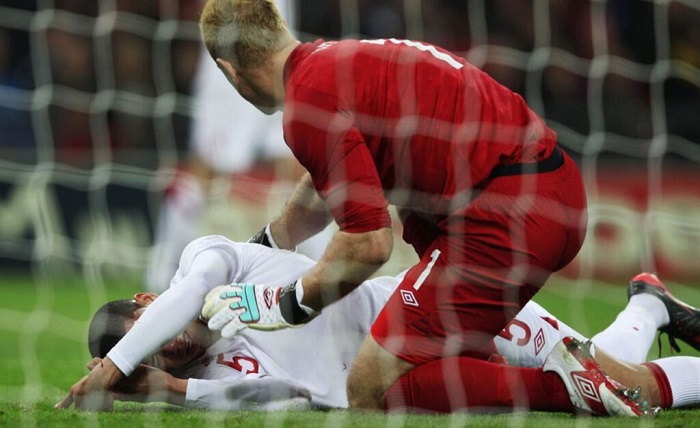
For a serious bettor, “X is injured” or “Y is suspended” is never the end of the analysis; it is the trigger. In the 2016/17 Serie A season, the difference between a casual and a professional mindset was not whether they saw the same team‑news headlines, but how they translated bans and injuries into actual changes in team strength and betting value before or after markets moved.
Why Injuries And Suspensions Matter Differently
Injuries and suspensions both remove players, but they behave very differently from a betting perspective. Injuries are usually uncertain in timing and severity, creating information gaps that markets must price under risk; suspensions, especially for yellow-card accumulation, are largely predictable long before they become official. Research and practitioner analysis consistently find that injuries, particularly to key players, are harder for markets to fully anticipate and therefore generate more mispricings, while suspensions tend to be better understood because their rules and timelines are transparent.
In the 2016/17 Serie A context, that meant that seeing “star striker out injured” was often a more exploitable story than “midfielder banned after five yellows.” The latter followed league-wide rules that every bookmaker and model could track, whereas the former hinged on medical updates, training responses and coach comments that reached the market in uneven ways and sometimes produced over- or under-reactions in the odds.
Understanding Serie A’s Suspension Framework As A Baseline
To interpret suspension news properly, you first need the structural rules. Since mid‑2010s reforms, Serie A players receive a one‑match ban after accumulating five yellow cards, with further suspensions triggered by additional card thresholds, plus automatic bans for straight reds or yellow‑red dismissals. Discipline stats and dedicated suspension trackers list which players are one card away from a ban and who is already ruled out for the next round; those lists turn “shock suspension” headlines into foreseeable events for anyone paying attention.
This predictability shifts the betting angle. When you see “key holding midfielder suspended,” the question is not whether bookmakers know – they do – but whether the market has calibrated his importance correctly. Because bans for accumulation are visible weeks in advance, most of the time the news is fully priced in by the time casual bettors read it. The serious edge lies in understanding when that player role is undervalued – for example, a defensive midfielder whose absence subtly raises the opponent’s expected goals more than headline models suggest.
Mechanism: How Missing Players Change Team Strength
A player missing through injury or suspension changes more than just a name on the team sheet. Analytical work on injuries and betting lines shows that odds shift based on several factors: the player’s on‑ball contribution, defensive impact, the quality of the replacement, the team’s historical performance without him, and the overall structure of the sport. In football, with 11 starters and relatively low scoring, even a key player may move prices modestly, but cumulative absences – three defenders out, or both starting central midfielders missing – can meaningfully alter team strength.
Suspensions tend to cluster in certain roles (aggressive defenders, combative midfielders), so they often weaken pressing, duels and set‑piece defending more than pure creativity. Injuries, on the other hand, hit all lines: strikers, playmakers, full-backs. That makes injury news particularly important for markets tied to goals and assists, while suspension news may bite harder in cards, set‑piece and “both teams to score” angles where defensive solidity matters. Understanding these role-specific effects is the core of turning simple availability news into a quantified edge.
Comparing Single-Star Absences To Multi-Player Gaps
Studies and practitioner summaries highlight that markets tend to react strongly to news about a single star – often correctly, but sometimes excessively – while underreacting to the combined effect of multiple non‑star absentees. In a 2016/17 Serie A frame, a headline striker missing might move the price visibly even if his backup was competent, whereas losing two centre-backs and a holding midfielder to a mix of injury and suspension could be quietly more damaging without a comparably dramatic headline. Serious bettors therefore treat “cluster risk” – several absences in the same unit – as at least as important as an individual injury.
Pre-Match Analysis: Building An Injury And Suspension Framework
For pre‑match reads, effective use of team‑news requires a structure, not just scattered reactions. Guides on injuries, suspensions and betting recommend a progression: identify absences, assess their importance using data, compare market moves with historical impact, and then decide whether the line has over- or under-adjusted. Applied to 2016/17 Serie A, that would look like:
- Using injury/suspension aggregators and club reports to list who is definitely out and who is doubtful.
- Mapping each player’s role (creator, finisher, stopper), minutes played and contribution to the team’s baseline xG for and against.
- Checking previous matches without the player to see whether performance drops matched the narrative, adjusting for opponent strength.
Only after this work does a serious bettor decide that, for example, losing a creative full‑back and a pressing winger may reduce a favourite’s effective attacking strength enough to justify opposing big handicaps, even if the market has barely moved from its pre‑news levels.
How A Betting Site’s Speed And Depth Changes The Edge
The practical value of reading team‑news depends on how quickly and flexibly you can act on it. Analytical pieces on “betting on news” stress that the earliest odds moves after injury reports are often the sharpest and most profitable, before bookmakers fully correct lines and totals. When using a web-based service with rich football coverage, the advantage is twofold: you can place bets quickly as soon as verified news appears, and you can choose markets that most directly reflect the expected impact – for example, adjusting player goal props, team totals or alternate handicaps rather than only match odds.
In that context, the question around แทงบอลออนไลน์ เว็บไหนดี is about operational fit: if your analysis of Serie A 2016/17 injury and suspension patterns is strong, you need a betting platform that both updates prices promptly and gives you enough market variety to express nuanced views – fading only the favourite’s scoring, or backing the opponent to find a goal against a weakened defence, instead of taking crude all-or-nothing positions. A slow or overly limited offering turns sharp reading of team‑news into theory rather than realised edge.
List Format: Practical Rules For Using Team-News Like A Professional
Most bettors know they should “check injuries,” but serious practice means turning that vague idea into repeatable rules. Synthesised advice from betting analysts and injury-impact guides suggests a handful of habits that consistently separate disciplined bettors from impulsive ones.
For a 2016/17‑style Serie A season, rules like these make team‑news actionable:
- Prioritise injuries over routine suspensions, because injury severity, recovery and recurring issues are harder for markets to model, while card bans follow transparent rules that bookmakers track as closely as you do.
- Focus on clusters of absences in a single unit – two centre-backs, both full-backs, or the entire central midfield – which often damage structure more than one star missing, even if the odds move less dramatically on headline news.
- Compare early line moves to historical impact: if odds shift far more than similar past absences justified, consider that the market may be overreacting and look for ways to oppose the move once the price has stretched.
Interpreted together, these rules encourage you to move beyond “player X out, so team Y weaker” and into a state where you systematically evaluate how much weaker, whether the market has already corrected appropriately, and whether alternate markets – totals, props, handicaps – offer better expressions of the underlying change in team strength.
Table Format: Types Of Absences And Their Typical Betting Impact
Different kinds of injury and suspension news produce different patterns in performance and odds. Pulling from general studies and practitioner guides, you can summarise the most common scenarios and how they usually translate into betting considerations.
| Type Of Absence | Information Pattern | Typical Market Reaction | How A Serious Bettor Responds |
| Long-term injury to key attacker | Gradual news, then confirmed out for weeks | Moderate, sustained drift against team | Reassess team’s baseline xG; look for early mispricing before the narrative settles |
| Sudden injury in training or warm-up | Late-breaking, often day-of-game | Sharp, fast line move once confirmed | Act quickly if your read on backup quality differs from consensus |
| Suspension from yellow-card accumulation | Fully foreseeable from discipline stats | Usually well priced once official lists update | Focus on under- or over-valued roles (e.g., defensive mids) rather than raw presence |
| Multiple defenders suspended/injured | May build over several matches | Often underreacted to if no single “star” involved | Upgrade opponent’s scoring potential; consider overs or BTTS |
| Rotation framed as “minor knock” or “rest” | Ambiguous phrasing, late line-ups | Markets may underweight subtle downgrades in quality | Use knowledge of coach behaviour to anticipate who actually sits |
This table underscores that not all absences are priced or exploitable in the same way. The biggest advantages usually arise when there is either timing asymmetry (you see reliable news before the market adjusts) or evaluation asymmetry (you rate the impact of an absence differently from consensus, based on data and tactical context).
Where Injury And Suspension News Can Mislead Bettors
Overreacting to team‑news is as dangerous as ignoring it. Commentaries on injury impacts warn that odds often move aggressively on headline names, especially forwards, even when the team has adequate replacements or a tactical scheme that distributes responsibility widely. In these cases, blindly following the move – or assuming the favourite is suddenly fragile – can mean buying an already-inflated price with little remaining edge.
There is also the risk of anchoring on availability and neglecting match‑ups, tactics, and fatigue from other sources. A side missing two defenders might still keep a clean sheet if the opponent lacks creativity or is fatigued from midweek action, while an almost full-strength team can underperform due to stylistic disadvantages that have nothing to do with injuries. The professional mindset treats injury and suspension news as just one input into a broader model of team strength and match dynamics, checked against line movement and historical data before money is committed.
Summary
For serious bettors analysing Serie A 2016/17, injury and suspension news was not a stream of dramatic headlines but a steady flow of inputs that could be quantified, ranked and compared with market reactions. Structural rules around yellow-card bans made many suspensions predictable, while injuries – with uncertain timing and severity – remained the more volatile and potentially profitable part of the information set. By distinguishing between individual stars and clusters of absences, using historical performance without key players, and watching how odds actually moved after news, disciplined bettors could tell when markets had already adjusted and when they had under- or overreacted, turning “team‑news awareness” into a genuinely systematic edge rather than a vague pre‑kickoff ritual.